
Should a Wilton Manors homeowner choose an inverter AC? A variable-speed compressor can adjust its cooling output instead of operating only at one capacity. That may improve comfort and efficiency, but the label alone does not establish your energy savings, humidity control, noise level, or repair costs. Compare matched-system ratings and a written installation scope for your home.
Table of Contents
Three Potential Benefits to Compare
- Temperature consistency. Modulating capacity may reduce temperature swings compared with an on/off system. Ask how the proposed controls and airflow will serve the rooms that currently feel uneven.
- Sound. A system running at lower capacity may sound quieter during some conditions. Compare published sound ratings for the specific indoor and outdoor models, plus the proposed equipment location.
- Humidity management. Longer operation at lower output may help in some homes, but an oversized system, duct leaks or poor airflow can still leave rooms damp. Ask how the contractor will assess moisture control.
How Variable-Speed Cooling Works
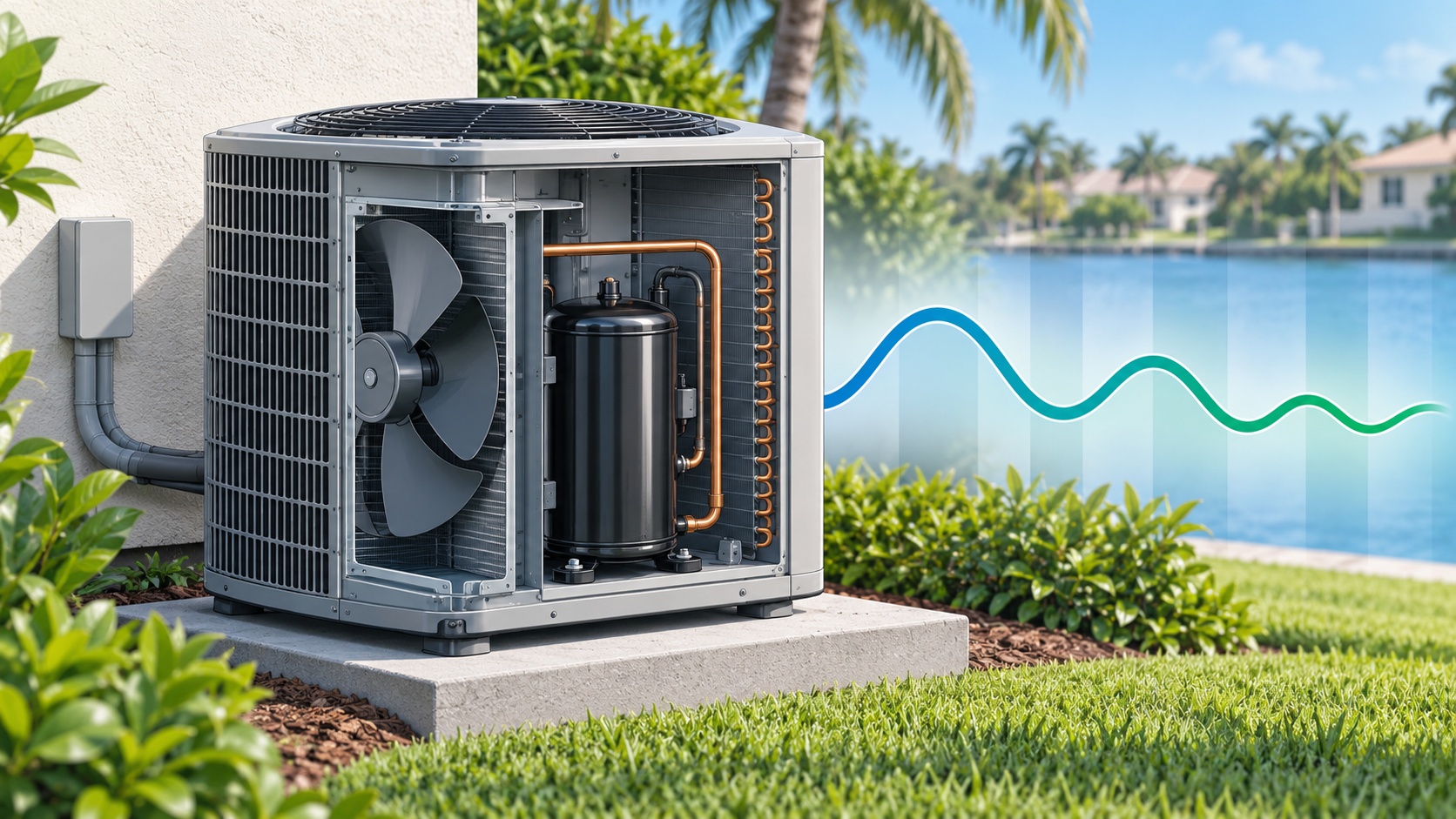
A conventional single-stage central AC generally runs its compressor at one capacity when cooling is called for. An inverter-driven, variable-speed compressor can change output within its designed range as conditions change. Actual system behavior also depends on the matched indoor equipment, thermostat or controls, airflow, and installation. ENERGY STAR explains that higher-efficiency equipment with variable capacity can adjust operation for comfort and efficiency; it does not promise the same result in every home.
Ask for the complete model numbers and matched-system SEER2 rating, rather than comparing the outdoor unit alone. ENERGY STAR’s installation guidance emphasizes correct sizing, airflow, ductwork, and refrigerant charge. Those checks matter whether the compressor is variable-speed or single-stage.
Compare the Full Installed Cost
Ask for two written proposals that show the equipment pair, cooling capacity, SEER2, controls, duct and electrical work, permits if applicable, labor, warranties, and total installed price. Higher efficiency can reduce cooling electricity use under comparable conditions, but payback depends on the price difference, your prior system, weather, settings, electric rates, and installation quality. Request the assumptions behind any savings estimate; no fixed payback period applies to every Wilton Manors or Oakland Park home.
Common Questions
Will an inverter AC always lower my FPL bill?
No. The matched system’s efficiency and your actual cooling use matter, while other household electricity use and rates also affect the bill. Compare qualified equipment and a written estimate rather than treating the compressor type as a savings guarantee.
Does variable speed mean fewer repairs?
There is no blanket reliability promise. Review the specific model’s parts and labor warranties, service access, and repair options. Both system types need filters, airflow, drainage, and other maintenance checks.
Can it solve a humid or hot room by itself?
Not necessarily. Sizing, ducts, insulation, controls, and airflow can affect comfort. Ask the contractor to diagnose the room before choosing equipment.
Ask what the proposal means by inverter equipment
Product descriptions can use several terms for equipment that changes its output. Ask the contractor to identify the exact proposed models and explain how the equipment operates as a complete system. Keep the discussion tied to those models rather than treating every product described as variable speed as interchangeable. Your proposal should make the equipment selection understandable without requiring you to interpret marketing language alone.
If you are comparing two options, request the same basic information for each: equipment models, controls, installation work, warranty terms and the conditions considered during selection. A clear comparison helps you understand whether a difference in price reflects equipment, installation scope or another part of the project. Do not assume the most expensive option includes every possible improvement.
Describe how you actually use the home
Tell the assessor about rooms that are difficult to cool, normal occupancy and changes you are planning. Mention whether the concern is temperature, airflow, humidity or a combination. These observations help define the problem you want the proposal to address. They do not establish that a particular equipment type is the right answer before the property is assessed.
Ask which comfort concerns the proposed system is expected to address and which may require separate work. Controls, duct condition and building characteristics belong in that conversation. An inverter label should not be treated as a guarantee that every room will feel the same or that humidity concerns will disappear. The proposal needs to explain the complete recommended approach for the home.
Compare ongoing use as well as the purchase
Ask how to operate the proposed controls, what maintenance applies and where service documentation will be kept. If the system has settings or features that differ from your current equipment, request an explanation before making assumptions about daily use. Keep manufacturer instructions and warranty information with the installation record.
Discuss operating-cost estimates carefully. A general efficiency statement does not establish your future utility bill. If a proposal includes projected savings, ask what usage, existing equipment and other assumptions support the estimate. Compare those assumptions with your own situation. Treat a projection as a projection, especially when the home or the way it is occupied is changing.
Make installation scope visible
Review whether the proposal includes controls, removal of existing equipment and any identified changes to connections or ductwork. Ask which details are confirmed and which depend on further inspection. A low equipment price can be difficult to compare with an installed proposal that includes additional work. Record exclusions so they remain visible during the decision.
If a contractor proposes keeping some existing components, ask how compatibility and condition will be assessed. Do not assume that equipment sharing a familiar brand name is automatically the correct combination. The written equipment description and installation scope should identify what is being installed, what is being retained and why the proposed arrangement fits the project.
Use a decision checklist rather than a feature count
Before deciding, check that you understand the proposed equipment, the comfort concerns being addressed, the full installed scope and the warranty. Confirm what remains uncertain about scheduling or availability. Ask any remaining operational questions before authorizing the work. An informed comparison does not require choosing the option with the longest feature list. It requires knowing what the proposal includes and how it relates to the assessed needs of your Wilton Manors home.
Next Steps in Wilton Manors
- Discuss matched equipment and installation scope with our AC installation team.
- If your current system still runs, consider preventive maintenance or a repair diagnosis before replacement.
- Use our repair-or-replace guide to compare your options.
For Wilton Manors, Oakland Park, and nearby Broward communities, call Elsmar Air Conditioning at (954) 309-4575 or request an appointment. Regular hours are Monday–Saturday, 8 a.m.–5 p.m.; availability depends on the schedule.