
A new AC noise in a Pompano Beach or Lighthouse Point home deserves attention, especially if cooling changes or the sound becomes loud or persistent. Humming at normal operation and brief startup sounds can vary by equipment; rattling, grinding, squealing or repeated clicking cannot identify a failed part by sound alone. Record what happens, then arrange an inspection if it continues.
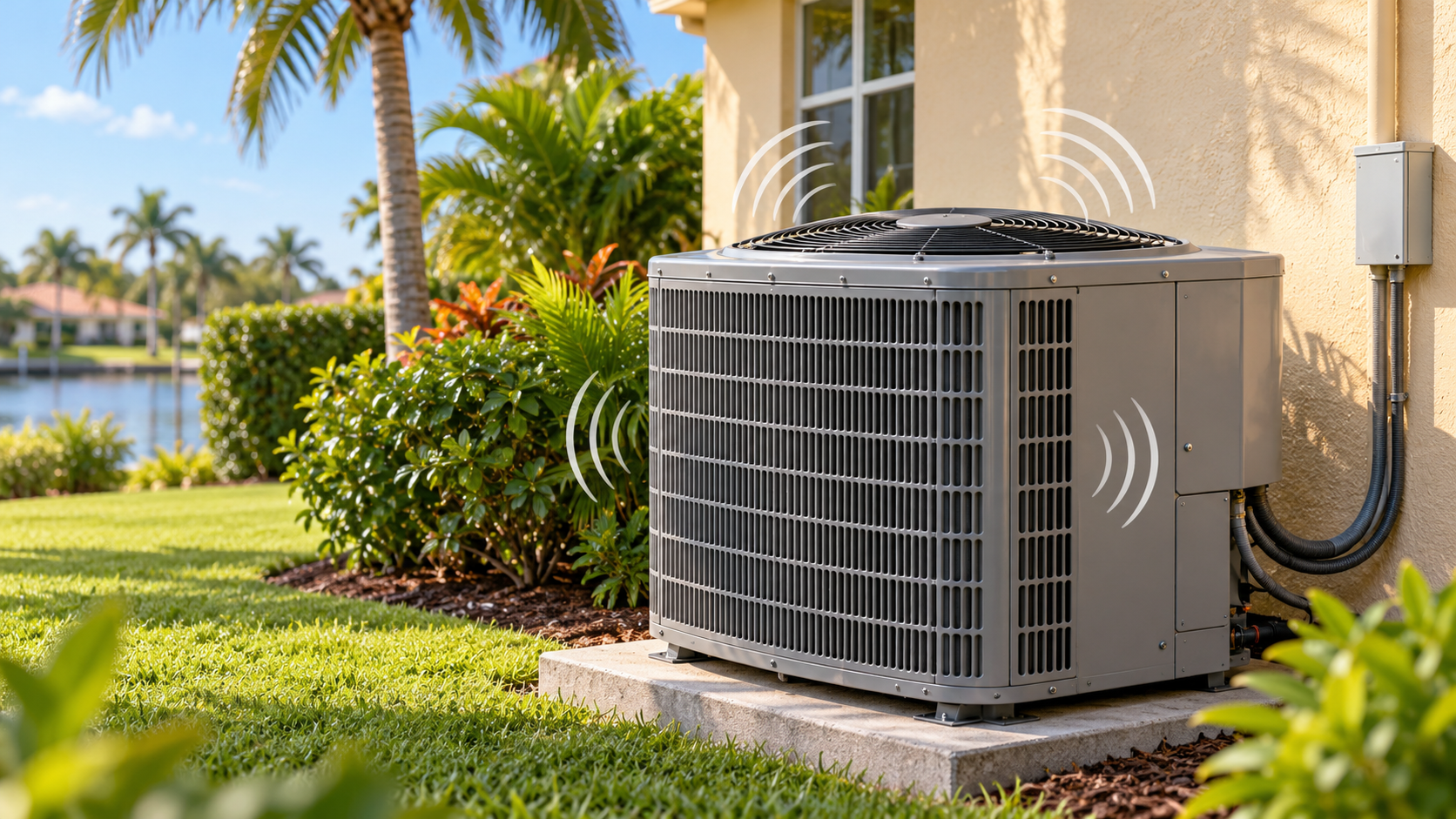
Table of Contents
3 Quick Checks When You Hear a New Sound
- Note the location from a safe distance. Tell the technician whether the sound seems to come from the indoor or outdoor unit, without opening a cabinet or touching moving parts.
- Describe and record it. Note whether it is rattling, grinding, squealing, buzzing or repeated clicking. A short recording can help explain an intermittent sound.
- Record the timing and performance. Note whether it happens at startup, during the cycle or at shutdown, and whether cooling, airflow or the thermostat display changed.
What Different Sounds Can Suggest
Rattling or grinding may involve a fan, motor, loose component or something else in the equipment. A high-pitched sound or repeated clicking can have multiple explanations too. Trane’s sound guide describes possibilities, while emphasizing that a technician must troubleshoot the actual system. Do not assume a noise means the compressor needs replacement.
A brief sound at startup or shutdown may be normal for a particular model, but a new or repeated sound should be compared with that system’s usual operation. Carrier’s repair guide lists rattling, grinding and humming among symptoms that warrant professional diagnosis. ENERGY STAR’s maintenance checklist includes checking system controls and blower components.
When to Call Right Away
Switch cooling off and seek qualified help if a new noise is loud or accompanied by a burning smell, smoke, exposed wiring or a repeatedly tripping breaker. Do not repeatedly restart the system or open an electrical panel. Trane advises shutting off a suddenly loud system and requesting repair. For a milder but persistent new sound, schedule an assessment and explain when it occurs; its urgency depends on the full symptoms.
Common Questions
Is a rattling sound serious?
Rattling can come from several sources, including a loose panel, fan or internal component. Its severity cannot be judged from the sound alone. If it is loud, worsening or paired with poor cooling, switch the system off and request service. Keep hands clear of the outdoor unit.
Can I diagnose the sound myself?
You can safely note the location, timing and type of sound and share a recording. Those details help a technician plan testing, but they do not confirm the cause. Leave electrical, fan and refrigerant components to a qualified professional.
Describe the sound in context
Tell the service team where the sound seems to come from and when it occurs. A sound at startup, a continuous sound while the equipment runs and an intermittent sound from a room grille are different observations. Use ordinary descriptions and explain whether the sound is new. You do not need to identify the failed part from the noise.
If it can be done safely from a normal occupied area, a short recording may help describe an intermittent sound. Do not reach into equipment, move guards or approach moving parts to improve the recording. Keep the date and context with it. A recording can document what you heard, but it cannot replace an on-site inspection or establish the cause by itself.
Record associated changes separately
Mention whether the system still cools, whether airflow changed and whether you noticed water, an unusual odor or repeated cycling. These details help describe the overall situation. Avoid deciding that every symptom must come from a single fault. The technician can assess how the observations relate to each other.
Explain any recent service or work near the equipment without assuming it caused the sound. Keep previous invoices available if the concern resembles an earlier complaint. A similar noise may be worth comparing with the record, but similarity does not establish that the same component has failed again.
Know what belongs in the service request
Provide the property address, contact information, equipment type if known and a summary of when the sound occurs. Tell the scheduler if you have stopped operating the system because of a concerning condition. Ask about the diagnostic fee and the next available appointment during staffed hours. Describing a noise does not guarantee a particular arrival or repair time.
For a business or rooftop unit, include the unit identifier and access procedure if you already have those details. Leave roof access and equipment identification to the service team when they cannot be obtained safely. A clear request should help arrange appropriate service, not encourage an occupant to inspect equipment in an unsafe location.
Ask how the proposed work addresses the finding
After diagnosis, request an explanation of what was found and why the proposed work is recommended. Ask whether the noise source is confirmed or whether more investigation is needed. Keep the immediate repair separate from unrelated maintenance recommendations so you understand the purpose of each item.
If the proposal involves a major repair or replacement discussion, compare the condition, history, warranty and full scope. Do not approve a system replacement solely because a recording sounds dramatic. Likewise, do not dismiss a new sound simply because the equipment still runs. The useful next step is an equipment-specific assessment and a written proposal that relates to the findings.
Keep a before-and-after record
Retain the service description and note whether the original sound changed after the authorized work. If a noise returns, describe the timing and any differences from the earlier complaint. Refer to the previous visit without assuming the cause is identical. A clear history helps the next assessment and keeps the Pompano Beach service discussion focused on observed changes, confirmed findings and the work actually completed.
Protect Your System
- Request AC repair when a new sound persists or cooling changes.
- Use preventive maintenance to have controls, fans and airflow checked.
- Discuss replacement only after the fault, condition and repair options are known.
Hearing something new from your AC? Call Elsmar Air Conditioning at (954) 309-4575 Monday–Saturday, 8 a.m.–5 p.m., or request an appointment online. Describe the sound and any change in cooling.
For Pompano Beach, Lighthouse Point and Deerfield Beach homes, an inspection can determine whether the source is a loose component, fan, control, motor or another issue. If you are in Pompano Beach, see our Pompano Beach AC repair and installation page for local service details. Repair timing depends on the findings and parts availability.
Ask for the test findings and a written repair scope before approving work.