
Water near your indoor AC or a new condensate shutoff in Coral Springs may point to an AC drain line clog, but several other problems can look similar. Switch cooling off if water is escaping, protect the wet area, and use these checks to describe the problem before a technician tests the drain.
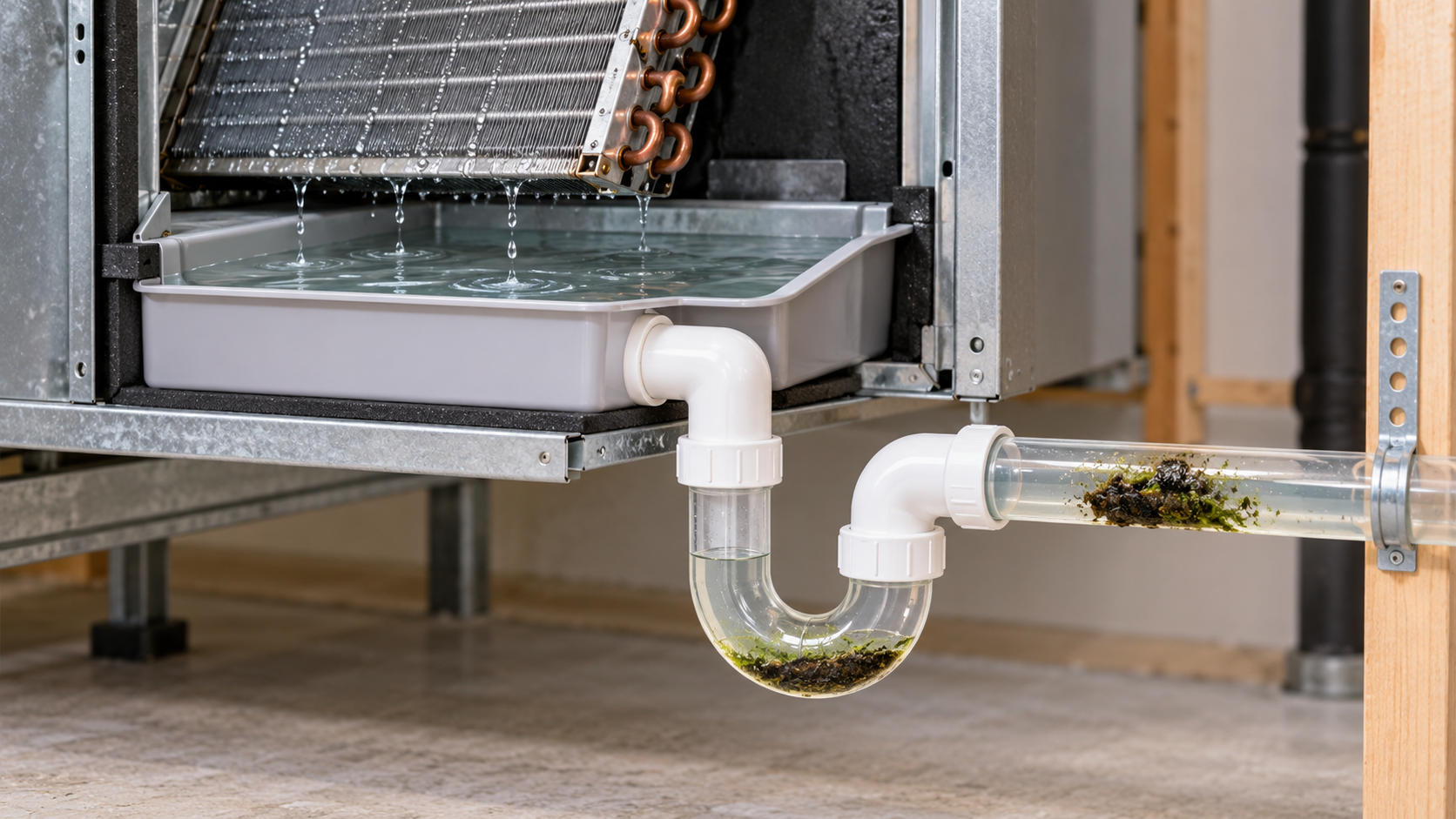
Table of Contents
3 Quick Checks for an AC Drain Line Clogged
- Note where water appears. Photograph the area near the air handler, ceiling, or wall. Do not touch wet electrical equipment.
- Observe the accessible pan or outlet. Water in a secondary pan or a dry exterior outlet is a clue, not proof of a clog; drain layouts and operating conditions vary.
- Record the cooling behavior. Tell the technician if the AC stopped, ice is visible, or a musty odor appeared. Do not open a cabinet to inspect the line.
The 5 Signs Your Drain Line Is Clogged
Five useful observations are water around the indoor unit, a full secondary pan, new ceiling or wall stains, an unexpected cooling shutoff, and visible residue in an accessible drain section. Any of these can have more than one cause. A float switch, if installed, may stop cooling when water rises; its presence and operation need inspection.
Ice thawing, a damaged pan, disconnected piping, or another building leak can also produce water near an air handler. A technician should trace the source and test the drain before recommending clearing or replacing a line.
Why Drain Lines Clog So Often Here
Cooling removes moisture from indoor air, and condensate must flow through the pan and drain. Carrier’s drain-line guidance explains that a blocked line is one possible cause when water stops draining and recommends turning the AC off before service.
EPA moisture guidance recommends clean drip pans, unobstructed drain lines, and prompt drying of wet materials. If water has reached a ceiling or wall, document it and arrange building-damage assessment as needed.
Common Questions
Can I clear an AC drain line clogged with algae myself?
Methods depend on the drain layout and equipment instructions. Do not pour chemicals or vinegar into an unidentified opening, disconnect piping, or use a vacuum near wet electrical equipment. If water is pooling, have a technician identify and clear the actual blockage and check for other leaks.
How often should drain lines be cleaned?
Ask for a condensate pan and drain check during routine AC maintenance. The needed cleaning schedule depends on the installation and what inspection finds; no schedule can guarantee that a clog will not occur.
Describe the drainage concern accurately
Water near an indoor unit, a system that stops and a visibly wet area are observations worth reporting. They do not establish a drain blockage without inspection. Explain where you noticed the condition, when it appeared and whether cooling changed. Avoid naming a particular component as failed before the service team has assessed the system.
If the property has had a previous drain-related repair, keep the service record available. A recurring water concern may resemble the earlier event without sharing the same cause. Ask what the previous documentation establishes and how it relates to the new findings. Accurate dates and completed-work descriptions are more useful than a general statement that the drain “always clogs.”
Leave equipment access and chemical treatments alone
Do not remove equipment panels or enter an unsafe area to find the drain route. If you do not know where a line runs or what a fitting is for, report that uncertainty. Leave internal inspection and appropriate service methods to the technician. A visible pipe does not establish that it is the correct access point for a home treatment.
Avoid following a generic chemical recipe without equipment-specific instructions. Products and procedures should be appropriate to the actual installation. Ask the technician what maintenance applies and request the guidance in writing. The aim is an understandable care plan, not a promise that a particular treatment will prevent every future blockage or water concern.
Explain access and property conditions
Tell the scheduler where the indoor equipment is located and whether safe access needs coordination. Identify the person who can provide entry and the person authorized to approve work. If the unit is in a managed property, explain any access rules before the visit. Do not assume the contact who opens the door can approve additional repairs.
Mention water affecting nearby building materials or belongings. Ask which concerns the HVAC visit will assess and whether other property work may need separate attention. An equipment repair should not be treated as a complete description of every response a wet ceiling or floor may require. Keep the responsibilities clear so an unresolved property concern is not overlooked.
Ask how the proposed work will be checked
After diagnosis, request a description of the confirmed problem and the work included in the estimate. Ask what checks are part of the service and whether further assessment is recommended. A system operating normally at the visit is different from a guarantee that drainage will never need attention again.
If several recommendations are provided, distinguish completed repairs from maintenance advice or open questions. Record them with the service history. This gives the next technician a clear account of what was actually done and helps you avoid paying for an assumed repeat procedure without understanding the current findings.
Keep a useful maintenance record
Retain the equipment identifier, service date and description of the authorized work. Follow the instructions that apply to the system and arrange any recommended service through an appropriate professional. If water or stopping recurs, report where and when it happens and whether the symptoms differ from the earlier visit. A clear record supports diagnosis at the Coral Springs property without encouraging unsafe access, repeated restarts or unverified drain treatments.
Protect Your System
- Request AC repair diagnosis for indoor water, a full pan, or repeated shutoffs.
- Review maintenance options for routine pan and drain checks.
- Ask about ductwork service only if inspection finds wet or damaged ducts.
For suspected drain trouble in Coral Springs, call Elsmar Air Conditioning at (954) 309-4575. Regular hours are Monday–Saturday, 8 a.m.–5 p.m. Describe where water appeared and whether cooling stopped; the cause and repair scope follow inspection.