
If your AC runs but does not cool your Coconut Creek home, begin with the thermostat and an accessible air filter. Warm airflow can have several causes; the symptom alone cannot identify a failed part or a refrigerant leak. Note what you observe, avoid opening electrical panels, and arrange a professional diagnosis if the basic checks do not restore cooling.
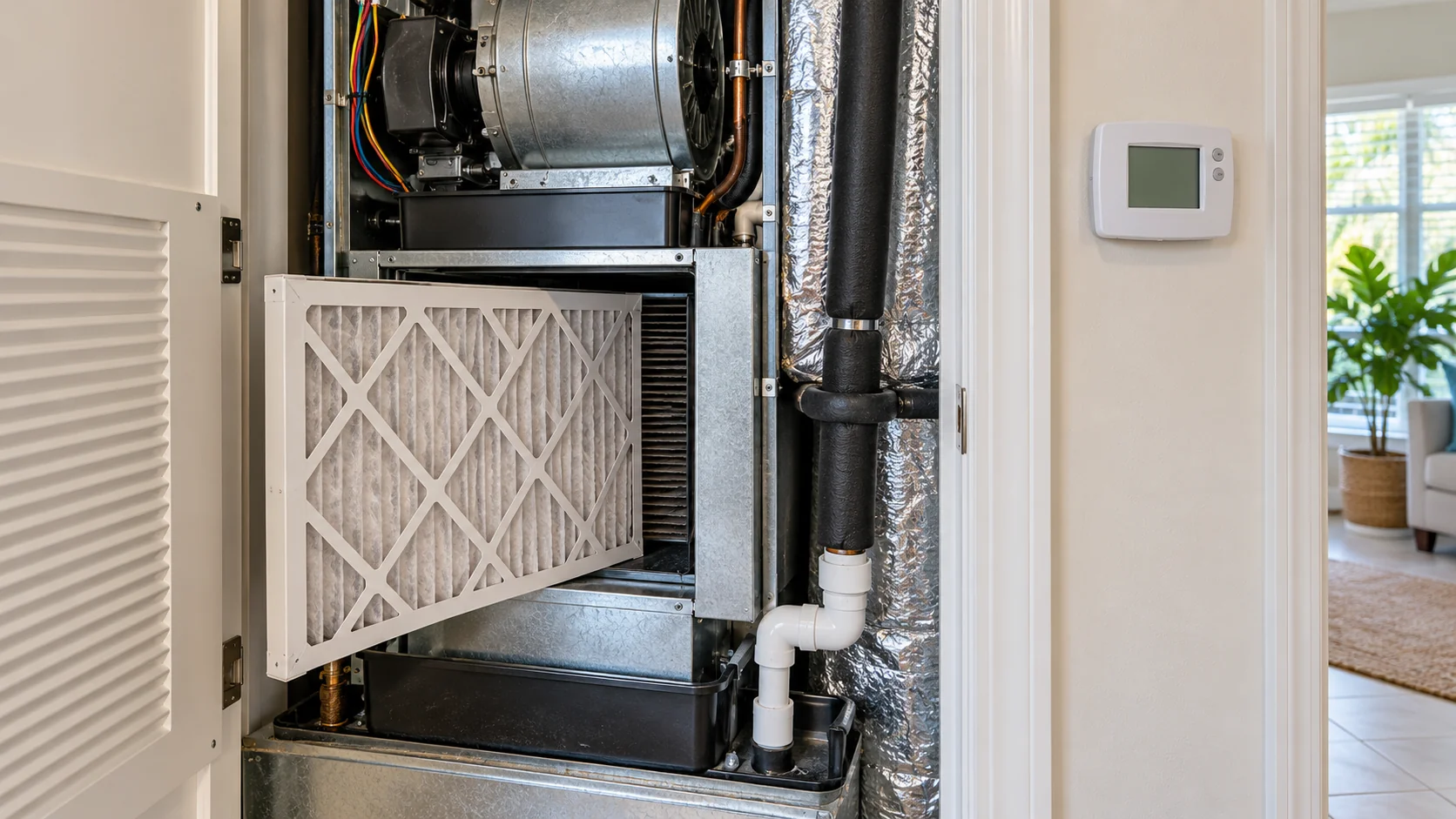
Table of Contents
3 Safe Checks to Make First
- Confirm the thermostat settings. Check that the system is set to cool, the requested temperature is below room temperature, and the fan is not set to run continuously when cooling is off.
- Look at an accessible filter. If it is visibly dirty, replace it with the size and type specified for your equipment. Do not force open a sealed or electrical panel to reach it.
- Observe the outdoor unit from a safe distance. Note whether it appears to be running and whether you see ice, pooled water or unusual noise. Keep hands clear of moving parts and leave electrical checks to a technician.
The Department of Energy’s home-cooling guide lists thermostat settings, dirty filters and refrigerant problems among possible reasons an AC may not cool. These checks narrow the information you can give a technician; they are not a diagnosis.
What a Technician May Check
A technician may measure airflow, inspect coils and controls, and test refrigerant performance if the symptoms warrant it. Restricted airflow can affect cooling and may contribute to icing. A refrigerant problem requires locating and repairing the cause; adding refrigerant without finding a leak is not a lasting fix. Electrical or compressor faults also require testing rather than a guess from warm air at the vent. ENERGY STAR’s maintenance checklist describes the professional checks involved.
When to Stop the System
If you see ice on accessible refrigerant lines or the indoor unit, switch cooling off and request service. If you notice a burning smell, smoke, exposed wiring, or water near electrical equipment, stop using the system and seek qualified help. Do not open service panels, handle refrigerant, or repeatedly reset a tripping breaker. If there is no immediate hazard but cooling remains poor, note the thermostat setting, filter condition, sounds and timing for the technician.
Common Questions
Does warm air mean the compressor has failed?
No. Warm airflow can result from controls, airflow, refrigerant or other equipment issues. A technician needs to inspect and test the system before naming the cause or recommending repair versus replacement.
Can the repair be finished in one visit?
Some problems can be resolved during an initial visit, while others need parts, leak repair or further testing. The timeline depends on the diagnosis, equipment and parts availability. Ask for the findings and a written scope before authorizing work.
Describe the cooling problem room by room
Before calling, note whether the whole home is uncomfortable or only one area. Record when the problem started and whether the equipment appears to run normally from a safe observation point. A room that has always felt warmer is a different concern from a sudden loss of cooling throughout the house. Explain those patterns separately so the service request does not turn several observations into one assumed cause.
If household members report different experiences, gather a simple summary instead of trying to prove one person’s description is correct. Include the areas involved and the times when the concern is most noticeable. You do not need to measure equipment performance yourself. The technician can decide what testing is appropriate after reviewing the symptoms and assessing the system.
Record what you checked and what you left alone
Tell the service team about ordinary checks already made, such as thermostat settings, an accessible filter or blocked room grilles. Explain the result without assuming it rules out every related issue. A filter that looks acceptable does not establish the condition of the entire air-distribution system, and a running fan does not prove the equipment is cooling correctly.
Leave electrical panels, refrigerant connections and equipment adjustments to qualified service personnel. Repeatedly changing settings or restarting the system can also make the symptom history harder to describe. If a concerning condition makes continued operation inappropriate, explain that when arranging service. A useful request includes what you observed before shutting the system down rather than an attempt to reproduce the problem at any cost.
Prepare the equipment and property information
Have the address, contact person and any safely available equipment records ready. Mention previous repairs and maintenance that may help explain the history. If the system serves a rental or managed property, identify the person who can authorize work and the person who will provide access. Those roles may be different.
Ask about the diagnostic fee, available appointment window and what the visit is expected to include. Do not assume that describing the symptom reserves an appointment or authorizes a repair. Confirm the next step with the service team. If parts or further assessment are needed after diagnosis, request a clear explanation of the work and timing before deciding how to proceed.
Evaluate the diagnosis rather than a symptom list
Many online lists describe possible causes of poor cooling. Use them to organize questions, not to choose a replacement part. Ask the technician what was tested, what was found and how the proposed repair relates to the reported problem. If more than one issue is identified, request a distinction between the immediate fault and separate maintenance concerns.
For a larger repair, compare the equipment condition, service history and written options. A cooling problem does not automatically mean that replacement is necessary, and a low initial repair price does not by itself describe the complete situation. The useful comparison is between documented proposals for the actual system, with exclusions and unresolved questions made clear.
Check the outcome and keep the record
After authorized work, ask what was completed and what follow-up applies. Keep the invoice and findings with the equipment history. If the same room remains uncomfortable or a symptom returns, report the details and timing. Avoid assuming that an apparently similar symptom has an identical cause. Clear records help the next assessment and support a practical decision about any remaining cooling concerns in the Coconut Creek home.
Request AC Service
Elsmar Air provides AC repair and preventive maintenance in Coconut Creek, Margate and nearby Broward communities. Call 954-309-4575 Monday–Saturday, 8 a.m.–5 p.m., or request an appointment. Tell us what you checked and whether the system is still running so we can plan the visit.