
Hear a new buzz near your outdoor AC unit in Boca Raton? The sound alone cannot identify the compressor or a failed part. Note when it occurs, whether the outdoor fan runs, and whether the home cools, then request testing if the sound persists.
Table of Contents
3 Things to Check When Your Compressor Buzzes
- Locate the sound from a safe distance. Note whether it comes from the indoor or outdoor unit. Do not open a cabinet or reach through a grille.
- Check cooling and airflow. Note whether the outdoor fan runs and whether supply air feels cooler than the room.
- Record the timing. Does the sound happen at startup, throughout a run, or after shutdown? Stop if a breaker trips again, you smell burning, or you see smoke.
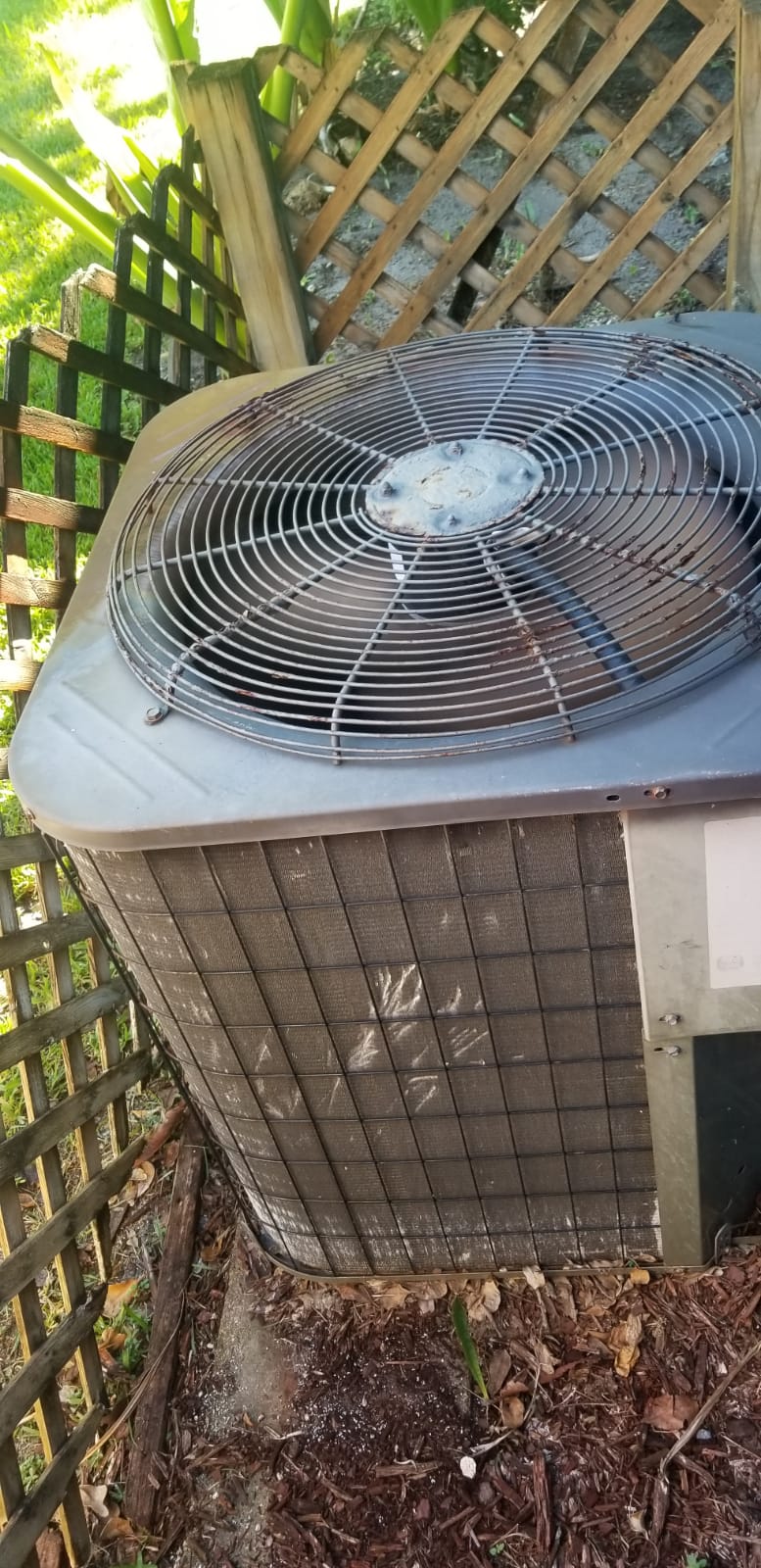
Common Causes of a Buzzing AC Compressor
A capacitor, fan motor, contactor, loose component, or compressor problem can produce a similar sound. Trane’s noise guidance recommends switching off a system with a suddenly loud sound and requesting professional repair. Sound alone does not establish the cause.
A technician can inspect the outdoor unit, test electrical components, and explain the findings before recommending a repair. Do not assume the compressor needs replacement because the cabinet buzzes.
Is a Buzzing AC Compressor an Emergency?
Switch the system off if the sound is suddenly loud, the outdoor fan does not run, cooling stops, a breaker trips again, or you notice smoke or a burning smell. Avoid wet or damaged electrical equipment and request qualified service. For a faint persistent change with otherwise normal cooling, arrange an inspection during regular hours.
ENERGY STAR’s maintenance checklist includes professional electrical and motor checks. Maintenance can identify problems but cannot guarantee that a component will not fail.
Common Questions
Can I fix a buzzing AC compressor myself?
No. Electrical components can retain dangerous charge, and the outdoor unit has moving parts. Do not open it, push the fan blade, or tighten a panel while it is running. Use a qualified HVAC technician.
How much does it cost to fix?
Cost depends on the tested fault, part, access, and repair scope. Ask for a written estimate after diagnosis. Our AC repair cost guide explains what to compare.
Locate the sound from a safe observation point
When describing a buzzing outdoor unit, explain whether the sound is new and whether it occurs at startup, continuously or intermittently. Identify the equipment from existing records if you have more than one system. You do not need to approach moving parts or remove a cover to make the service request useful.
Avoid treating the word “compressor” as a confirmed diagnosis simply because the noise seems to come from the outdoor unit. Several components are located there. Describe the sound and associated operation, then let the technician determine its source. A clear observation leaves room for an appropriate assessment instead of directing the visit toward a particular part before testing.
Describe cooling and electrical observations separately
Tell the service team whether the home is cooling, whether airflow has changed and whether the equipment repeatedly stops. Mention any electrical interruption you actually observed, but do not investigate internal wiring. A running system and an unusual sound can coexist; one does not establish that the other is harmless.
If you notice a condition that makes operation unsafe or concerning, explain it when arranging service. Do not repeatedly restart the equipment just to capture the sound. Keep people away from moving or electrical areas. The purpose of a recording or note is to describe ordinary observations, not to create an equipment test by an occupant.
Use recordings as context rather than proof
A short recording made safely can help communicate an intermittent noise. Include when it was recorded and what the system was doing. Keep the original clip without editing it to emphasize one sound. Background conditions can affect what a recording captures, and the clip cannot establish the cause on its own.
If the noise is absent during the visit, explain the pattern rather than assuming the problem has disappeared. The technician can decide what assessment is appropriate and whether further observation is needed. Ask what information to collect under normal safe use if the concern returns, while leaving equipment testing and adjustments to service personnel.
Compare findings with the service history
Have previous invoices available if the equipment has had a similar complaint. Ask whether the earlier findings are relevant to the current diagnosis. A matching sound does not prove an identical failure, and a recent repair does not automatically establish the cause of a new symptom. Accurate dates and completed-work descriptions help keep those discussions grounded.
Request a written repair proposal that identifies what is being addressed. If additional maintenance or replacement planning is recommended, ask how those items relate to the confirmed findings. Keep them separate from the immediate repair so you can make an informed decision rather than treating every recommendation as part of a single unexplained price.
Confirm the next step and retain the record
Ask about the proposed work, warranty terms and any parts-related scheduling uncertainty. A diagnosis is different from an authorized repair, and a proposed service window is different from a confirmed appointment. Keep those distinctions clear with the person arranging access and the person approving the work. Save the final service record so any future buzzing or cooling concern at the Boca Raton property can be discussed with a documented history.
Keep a short record of the sound
A useful service note describes what you observed without naming a failed component. Record whether the buzz begins as cooling starts, continues after the thermostat stops calling, or appears only intermittently. Mention recent storms, electrical interruptions, or work near the outdoor equipment. A short recording from a safe distance may help illustrate the pattern, but never remove a cover or reach through a grille to capture it. If the unit smells burned, trips a breaker, or repeatedly struggles to start, stop using it and arrange professional evaluation instead of cycling the power again.
Protect Your System
- Request AC repair diagnosis for a persistent or worsening buzz.
- Review maintenance options for routine system checks.
- If a major repair is confirmed, compare it with repair-or-replace factors.
For an outdoor AC buzz in Boca Raton, call Elsmar Air Conditioning at (954) 309-4575. Regular hours are Monday–Saturday, 8 a.m.–5 p.m. Describe the sound and cooling behavior; the cause and quote follow inspection.